Pressure control in natural gas distribution networks is critical for ensuring a safe and sustainable gas supply. Pressure fluctuations occurring at city gate stations, regional regulation points, and distribution lines with variable consumption profiles may lead to equipment failures, increased maintenance costs, and disruptions in service continuity. At this point, natural gas regulators play a fundamental role in ensuring safe and stable pressure control by reducing high-pressure gas to the level required by the distribution network.
Natural gas regulators reduce the high-pressure gas coming from transmission lines to the specified outlet pressure while also responding rapidly to sudden consumption changes to maintain stable network pressure. Proper regulator selection helps prevent pressure fluctuations in natural gas distribution networks, reduces the risk of pressure hunting, and protects downstream equipment. For this reason, regulators used in natural gas distribution regulation systems should be considered not merely as equipment, but as critical components that directly affect network safety.
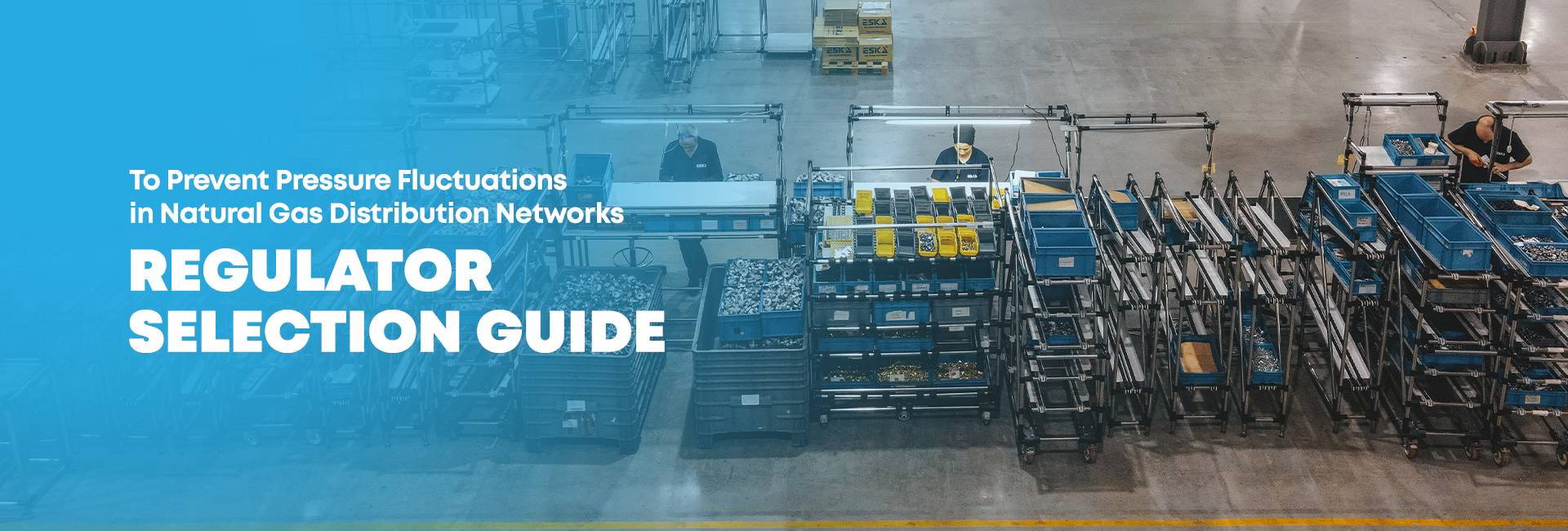
Natural gas regulators used in distribution networks are designed in different types depending on pressure level, flow rate requirements, and control sensitivity. Pilot-operated regulators are preferred especially at city gate stations where high flow rates and variable load conditions exist, providing precise pressure control. Direct-acting regulators, on the other hand, are used at medium-scale distribution points and balance sudden demand changes with fast response times. In networks where high inlet pressure is present, two-stage regulation solutions contribute to controlled pressure reduction and enhance overall system stability.
The operating principle of natural gas regulators is based on a diaphragm, spring, and main valve mechanism. High-pressure gas entering the regulator is controlled according to pressure changes detected by the diaphragm, and the desired outlet pressure is maintained with the help of spring force. This structure ensures controlled gas flow and delivers stable pressure to the distribution network. Proper design of this mechanism is especially important in networks where sudden flow changes occur.
When determining regulator selection criteria, the compatibility of inlet and outlet pressure ranges with system requirements should be evaluated as a priority. The regulator’s flow capacity must be selected to prevent pressure drops or fluctuations even during peak consumption periods. Additionally, the regulator must adapt to the dynamics of the distribution network and respond quickly and stably to sudden load changes. Compliance with national and international standards, relevant regulations, and legislation is a critical requirement for safe operation in natural gas distribution networks.
Material selection and mechanical durability in distribution network equipment are key determinants of long-term performance. The regulator body must be resistant to corrosion, temperature variations, and high-pressure conditions to ensure reliable operation in challenging field environments. Furthermore, ease of maintenance, service accessibility, and spare part availability are among the factors that directly impact the total operating costs of gas distribution companies.
In conclusion, preventing pressure fluctuations in natural gas distribution networks is possible through proper regulator selection. Suitable regulators enhance network safety, reduce maintenance and failure costs, and support uninterrupted gas supply. Therefore, regulator selection should be treated not merely as a technical procurement process, but as a comprehensive evaluation requiring engineering expertise, field experience, and a long-term operational strategy.

 Türkçe